
Natural Stone vs Engineered Stone: Which Is Right for Your Project?
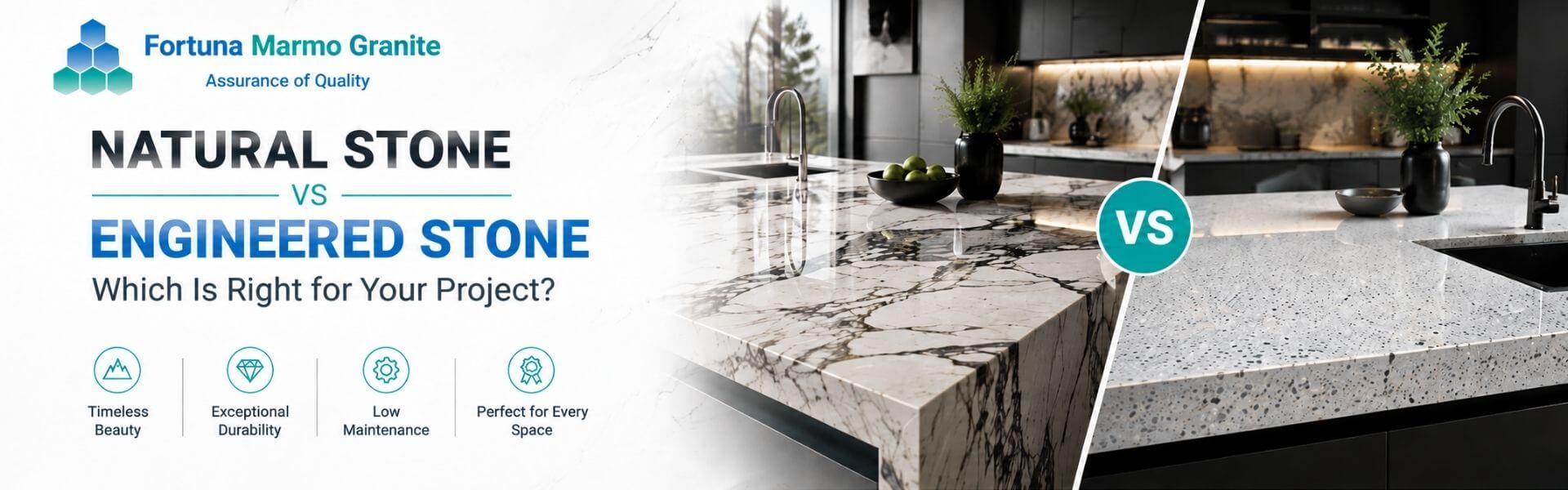
When choosing the right stone for a kitchen countertop, bathroom vanity, flooring, wall cladding, or other interior and architectural application, two popular options often stand out: natural stone and engineered stone.
Both materials can create a beautiful, durable finish, but they differ significantly in appearance, maintenance, performance, customization, and cost. The right choice ultimately depends on your project's design, functionality, budget, and long-term expectations.
In this guide, we'll compare natural stone vs engineered stone to help you make a confident and informed decision.
Natural Stone vs Engineered Stone: Key Differences
The best way to understand which material is right for your project is to compare the factors that matter most.
1. Appearance and Design
Natural stone offers a level of variation that is difficult to reproduce artificially. Marble, granite, quartzite, and other stones can feature one-of-a-kind veining and patterns. No two slabs are exactly alike.
This makes natural stone an excellent choice when you want:
- A luxurious, authentic appearance
- Unique veining and patterns
- Natural color variation
- A timeless architectural look
- A strong connection to natural materials
Engineered stone, on the other hand, offers greater consistency. Manufacturers can control colors, patterns, and finishes to create a more predictable appearance.
If your design requires several surfaces to look nearly identical, engineered stone may be the more practical option.
Winner for uniqueness: Natural stone
Winner for consistency: Engineered stone
2. Durability
Durability depends heavily on the specific type of stone rather than simply whether it is natural or engineered.
Granite and quartzite, for example, are known for their strength and are widely used in high-traffic and high-use areas. Some softer natural stones, such as certain varieties of marble and limestone, can be more vulnerable to scratching, staining, or etching.
Engineered stone is designed with consistent properties, but its performance varies by manufacturer and product type. Some engineered surfaces are highly durable and suitable for demanding applications, while others may have limitations related to heat, impact, or outdoor exposure.
Before selecting a material, always check the manufacturer's technical specifications and recommended applications.
3. Maintenance Requirements
Maintenance is another important consideration.
Many natural stones require appropriate sealing to help protect against staining and moisture. The maintenance schedule depends on the stone type, finish, location, and level of use.
For example, a heavily used kitchen countertop may require more attention than a decorative wall application.
Engineered stone is often selected for its relatively straightforward maintenance. Many products can be cleaned with mild soap, water, and a soft cloth. However, "low maintenance" does not mean maintenance-free. The surface still needs to be cleaned properly, and manufacturers' care instructions should be followed.
For homeowners who prioritize easy day-to-day care, engineered stone can be an attractive option.
4. Heat and UV Resistance
Heat resistance is an important factor for kitchen applications.
Certain natural stones, particularly granite and quartzite, can perform very well around heat, although excessive or sudden heat exposure can still potentially damage a surface or its finish.
Engineered stone requires more careful consideration because some products can be affected by high temperatures, particularly around cooktops and other heat sources.
UV exposure is another consideration. Some engineered stone products are not intended for prolonged direct sunlight and may experience color changes over time.
If you're selecting stone for an outdoor kitchen, exterior wall, patio, or sun-exposed space, confirm that the specific product is rated for exterior and UV exposure.
5. Color and Pattern Selection
Natural stone provides authentic variation, but that variation can make exact color matching difficult.
A sample may give you an idea of the stone's general appearance, but the actual slab can look noticeably different. For this reason, viewing the actual slab before fabrication is highly recommended for important projects.
Engineered stone provides more predictable color and pattern options. This can make it easier to coordinate countertops, backsplashes, flooring, cabinetry, and other interior elements.
Natural stone: Better for organic variation and individuality.
Engineered stone: Better for predictable and repeatable designs.
6. Sustainability and Environmental Considerations
Sustainability is increasingly important when selecting building and interior materials.
Natural stone is a naturally occurring material and can have a long service life. However, quarrying, processing, transportation, and installation all have environmental impacts.
Engineered stone also has an environmental footprint because manufacturing involves processing and, depending on the product, resins or other materials.
If sustainability is a major priority, ask your supplier about the stone's origin, manufacturing process, environmental certifications, and responsible sourcing practices.
Natural Stone vs Engineered Stone Comparison
Which Is Better for Kitchen Countertops?
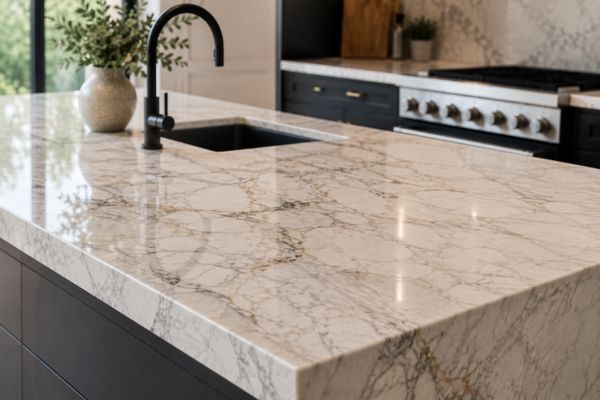
The kitchen is one of the most demanding environments for a stone surface. Countertops need to handle daily food preparation, spills, cleaning, heat, and regular use.
Natural stone such as granite or quartzite can be an excellent choice when durability and natural beauty are priorities. Marble can also create an exceptional kitchen aesthetic, although its susceptibility to etching and staining means it requires more care.
Engineered stone can be a practical choice when you want a consistent appearance and convenient everyday maintenance. However, you should always check the manufacturer's recommendations regarding heat exposure, installation, cleaning, and other limitations.
The best countertop material is not necessarily the hardest material. It is the one whose performance and maintenance requirements match the way you use your kitchen.
Which Is Better for Bathrooms?
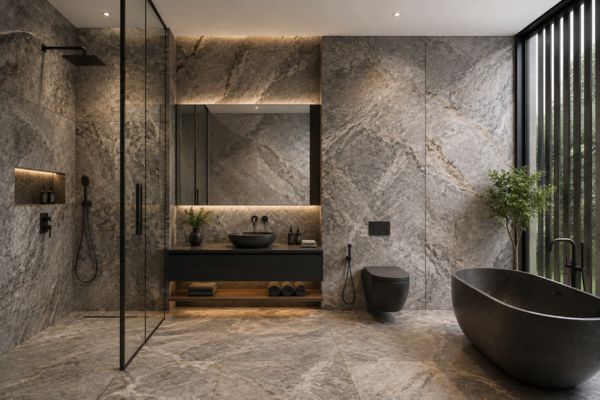
Both natural and engineered stone can work beautifully in bathrooms.
Natural marble, limestone, and other stones can create a sophisticated, spa-like atmosphere. Their natural variation adds depth and character to walls, floors, shower areas, and vanities.
Engineered stone can be a good option when you want a clean, contemporary appearance with consistent patterns and relatively simple maintenance.
For wet areas, however, proper installation is just as important as material selection. Waterproofing, substrate preparation, joints, drainage, and appropriate sealing or surface treatment can all affect long-term performance.
Which Is Better for Outdoor Projects?
For exterior applications, carefully evaluate the material's resistance to weather, moisture, temperature changes, and UV exposure.
Natural stones such as granite, slate, and certain types of limestone can be suitable for outdoor applications, depending on the climate and intended use.
Not every engineered stone is designed for exterior applications. Some may be unsuitable for prolonged sunlight or extreme temperature fluctuations.
Always verify the manufacturer's exterior-use specifications before installing engineered stone outdoors.
For exterior applications, carefully evaluate the material's resistance to weather, moisture, temperature changes, and UV exposure.
Natural stones such as granite, slate, and certain types of limestone can be suitable for outdoor applications, depending on the climate and intended use.
Not every engineered stone is designed for exterior applications. Some may be unsuitable for prolonged sunlight or extreme temperature fluctuations.
Always verify the manufacturer's exterior-use specifications before installing engineered stone outdoors.
Cost Considerations
The price of stone depends on much more than the material itself.
Your total project cost may include:
- Material price
- Slab size and availability
- Thickness
- Surface finish
- Edge profile
- Cutting and fabrication
- Transportation
- Installation
- Sealing or surface treatment
- Project complexity
- Waste and material yield
Some premium natural stones can be expensive because of rarity, sourcing, or demand. At the same time, premium engineered surfaces can also command a significant price.
Instead of comparing only the cost per square foot, consider the total installed cost and expected service life.
How to Choose the Right Stone for Your Project
Before making a decision, ask yourself a few important questions:
What is the application?
A kitchen countertop has different requirements from a decorative wall, bathroom floor, fireplace surround, or outdoor patio.
How much maintenance are you comfortable with?
If you prefer a material that requires minimal routine care, an engineered option may be worth considering. If you appreciate the character of natural stone and don't mind periodic maintenance, natural stone may be a better fit.
Do you want a unique or consistent appearance?
Choose natural stone when variation and individuality are part of the design. Choose engineered stone when consistency is more important.
How much exposure will the surface receive?
Consider heat, moisture, direct sunlight, heavy traffic, chemicals, and potential impact.
What is your budget?
Compare the complete installed cost rather than just the price of the raw material.
Can you view the actual slab?
For natural stone especially, viewing the actual slab is one of the best ways to ensure that the color, veining, and overall appearance match your expectations.
Natural Stone or Engineered Stone: The Final Verdict
So, which is better: natural stone or engineered stone?
There is no single answer.
Natural stone: is an excellent choice if you value authenticity, unique patterns, natural variation, and timeless character. It can bring depth and individuality to both traditional and contemporary architecture.
Engineered stone: may be the better choice if you prioritize consistency, predictable design, and convenient maintenance. It can work particularly well in modern interiors where a uniform appearance is important.
Ultimately, the right material should be selected based on application, performance, aesthetics, maintenance, budget, and environmental considerations rather than trends alone.
Final Thoughts
Choosing between natural stone and engineered stone is an important decision because the material can influence the appearance, functionality, and longevity of your entire project.
Before purchasing, compare samples or actual slabs, review technical specifications, discuss maintenance requirements with your stone supplier, and make sure the product is appropriate for its intended application.
Whether you choose the natural character of marble and granite or the consistency of an engineered surface, a well-selected and professionally installed stone can become a lasting part of your home or commercial space.
Looking for the right stone for your next project? Work with an experienced stone supplier or fabricator who can help you compare materials, finishes, performance requirements, and installation options based on your specific needs.