
Exploring Red Sandstone from Rajasthan, India: A Complete Guide
Exploring Red Sandstone from Rajasthan, If you have ever stood in front of the majestic Red Fort in Delhi or marveled at the intricate carvings of the Agra Fort, you have seen the soul of Rajasthan's earth. Rajasthan Red Sandstone is not just a building material; it is a piece of history that has shaped the architectural identity of India for centuries.
In this guide, we will dive deep into everything you need to know about this "Fire Stone"—from where it comes to why it remains a top choice for modern architects today.
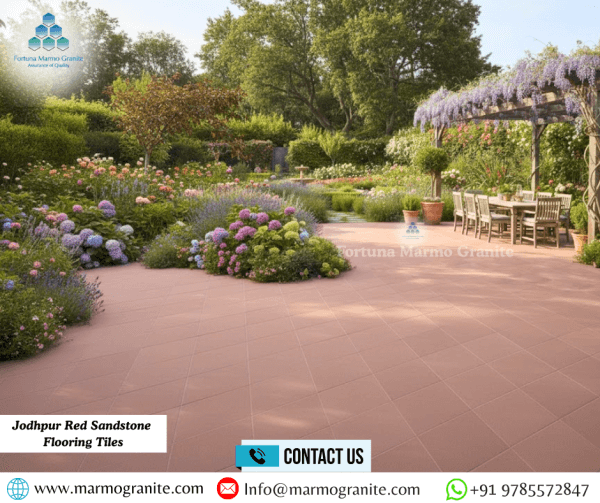
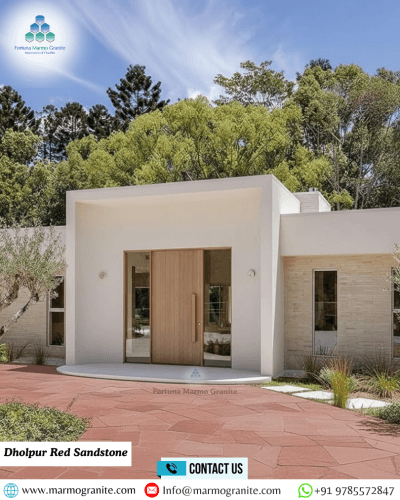
What is Rajasthan Red Sandstone?
Red sandstone is a sedimentary rock formed over millions of years. It consists of tiny grains of quartz and other minerals cemented together by iron oxides. It is this iron content that gives the stone its iconic range of colors, from soft blush pinks to deep, earthy crimsons.
In Rajasthan, this stone is primarily quarried from the Vindhyan Supergroup of rocks, a geological formation that is famous for producing some of the most durable and beautiful stones in the world.
The Famous Varieties of Red Sandstone
- Agra Red Sandstone (Dholpur Red)
Though named after the city of Agra (where it was used extensively), this stone is actually quarried in the Dholpur district of Rajasthan. It has a very fine grain and a consistent, deep red color. It is soft enough to be carved into delicate patterns but hard enough to withstand the passage of time.
Often referred to as Chitar Stone, this variety comes from the "Blue City," Jodhpur. It is slightly more rugged and has a unique texture. This stone was used to build the famous Umaid Bhawan Palace.
Why is it So Popular? (Key Benefits)
Why do builders and homeowners keep coming back to Rajasthan Red Sandstone? It's a mix of beauty and "tough-as-nails" durability.
- Weather Resistance: Unlike some stones that crumble or fade, red sandstone handles rain, extreme heat, and frost exceptionally well.
- Easy Maintenance: It doesn't require expensive chemicals to clean. A simple wash with water usually does the trick.
- Thermal Insulation: It has a natural ability to stay cool in the summer and retain a bit of warmth in the winter, making it perfect for Indian climates.
- Carving Potential: Because it is a "freestone" (meaning it can be cut easily in any direction), it allows artisans to create breathtakingly detailed lattices and statues.
The Journey: From Quarry to Construction
The process of bringing this stone from the ground to your home is a fascinating blend of heavy machinery and traditional craftsmanship.
- Extraction: Massive blocks are cut from the Earth using wire saws and excavators.
- Slab Cutting: These blocks are transported to factories where they are sliced into slabs of various thicknesses (usually 20mm to 50mm).
- Finishing: This is where the magic happens. The stone can be finished in several ways:
- Natural: Rough and grippy, great for outdoors.
- Honed: Smooth and matte, perfect for indoor floors.
- Shot-blasted: Textured for extra slip resistance.
- Polished: Shiny and deep in color.
Modern Applications: How to Use it Today
Outdoor Paving and Patios
Because it is naturally slip-resistant when left in a natural or sandblasted finish, it is the #1 choice for garden paths, swimming pool decks, and courtyards.
Wall Cladding
Architects use thin slabs of red sandstone to "wrap" modern buildings. This gives the structure a warm, organic feel that contrasts beautifully with glass and steel.
Interior Features
Imagine a fireplace surround or a feature wall made of deep red Karauli stone. It adds an instant sense of luxury and history to a living room.
Landscaping
From stone benches to birdbaths and large decorative boulders, red sandstone is a staple in high-end garden design.
How to Identify Quality Red Sandstone
| Feature | What to Look For |
|---|---|
| Color Consistency | While natural variations are beautiful, avoid slabs with large black “oil spots” or cracks. |
| Water Absorption | High-quality sandstone has low porosity. If you pour water on it, it shouldn’t soak in instantly. |
| Edge Quality | The edges should be clean and not “crumbly.” If the stone flakes off easily in your hand, it may be of lower grade. |
| Sound Test | Tap the stone with a small hammer. A clear “ring” indicates a solid stone; a dull “thud” suggests internal cracks. |
Conclusion
Red Sandstone from Rajasthan stands as a timeless natural stone known for its warm hues, durability, and architectural elegance, making it an ideal choice for both traditional and contemporary projects. From heritage monuments and temples to modern landscaping, paving, and exterior cladding, this stone offers excellent strength, weather resistance, and long-lasting beauty.
Sandstones Supplier From India With a wide range of finishes, sizes, and applications, Rajasthan red sandstone continues to be a preferred material for builders, architects, Exploring Red Sandstone from Rajasthan, and designers worldwide. Fortuna Marmo Granite, as a trusted natural stone exporter and manufacturer from India, ensures premium-quality red sandstone processed with precision and supplied to global standards, helping transform spaces with authenticity, reliability, and enduring natural charm.