
Choosing Quartz Countertops: What Designers Want You to Know
Choosing Quartz Countertops, So, you've finally decided to give your kitchen or bathroom a facelift. You've looked at a thousand Pinterest boards, and one word keeps popping up: Quartz. It's the "it" material of the decade. But before you head to the showroom and get overwhelmed by a sea of stone slabs, there are a few things interior designers wish you knew. Choosing a countertop isn't just about picking a pretty color; it's about finding the right partner for your daily life., Let's dive into the insider secrets of choosing quartz like a pro.
1. Quartz Isn't "Natural" Stone (And That's a Good Thing)
One of the biggest misconceptions is that quartz is pulled out of the ground in big blocks like marble or granite. It's actually an engineered stone. Designers love this because it means consistency. If you pick a sample in the store, the slab that shows up at your house will actually look like that sample.
- The Mix: Most quartz tops are about 90% to 94% crushed natural quartz mixed with polyester resins (the glue) and pigments (the color).
- The Benefit: Because it's man-made, it's non-porous. You don't have to worry about red wine or coffee seeping into the stone and leaving a permanent "memory" of last night's dinner.
2. Say Goodbye to the Sealer
If you've ever owned granite or marble, you know the drill: every year or two, you have to clear everything off the counters, apply a smelly chemical sealer, and wait for it to dry. It's a chore.
Quartz never needs to be sealed. Ever. The resin used to make it creates a permanent barrier. For the busy homeowner (or the person who just wants to live their life), this is the ultimate selling point. Designers recommend quartz for families because it's as close to "set it and forget it" as you can get in home design.
3. Mind the Heat!
- Here is the one "gotcha" that designers always warn their clients about. Because quartz is held together by resin (which is essentially a type of plastic), it is not heat-proof.
- If you take a boiling pot of pasta off the stove and set it directly on your quartz counter, you risk "thermal shock." This can cause the resin to burn or the slab to crack.
- Designer Tip: Always keep a few stylish trivets or hot pads handy. Think of quartz as heat-resistant, not heat-invincible.
4. Texture Matters: Polished vs. Honed vs. Leathered
Most people think quartz only comes in a shiny, mirror-like finish. While "Polished" is the most popular, designers often suggest other textures to give a room more character:
- Polished: The classic look. It's easy to clean and reflects light, making small kitchens feel bigger.
- Honed (Matte): This has a soft, velvety feel. It looks incredibly modern and high-end, but be warned: it can show fingerprints and oil spots more easily than shiny surfaces.
- Leathered: This finish has a slight texture or "dimpling." It's great for hiding crumbs and looks very much like natural stone.
- The "Marble Look" Without the Heartache
Almost every designer has a client who wants white Carrara marble but doesn't want the staining and scratching that comes with it. This is where quartz shines.
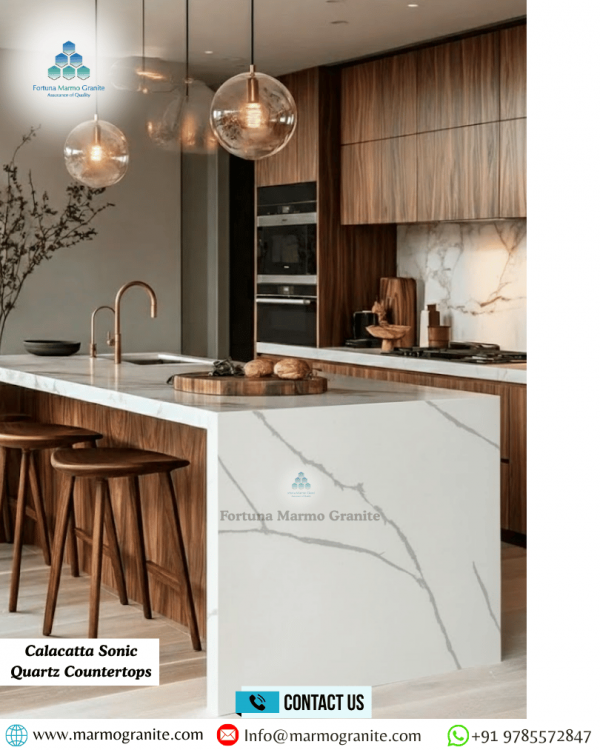
Manufacturers have become geniuses at creating "veining" that mimics natural stone. You can get the look of expensive Italian marble with the durability of a tank. When choosing a veined quartz, designers suggest looking at the "jumbo slabs" to see how the pattern flows. You don't want a "robotic" or repeating pattern that looks fake.
- Consider the Thickness
When you go to buy, you'll usually see two standard thicknesses: 2cm and 3cm.
- 3cm (about 1.25 inches): This is the gold standard for kitchens. It looks substantial, is stronger, and doesn't require an extra plywood support underneath.
- 2cm (about 0.75 inches): Often used in bathrooms or for a more "minimalist" look. If used in a kitchen, fabricators often add a "mitered edge" to make it look thicker than it actually is.
- It's Not Just for Countertops
Designers are getting creative with quartz. Since it's so durable, why stop at the counter?
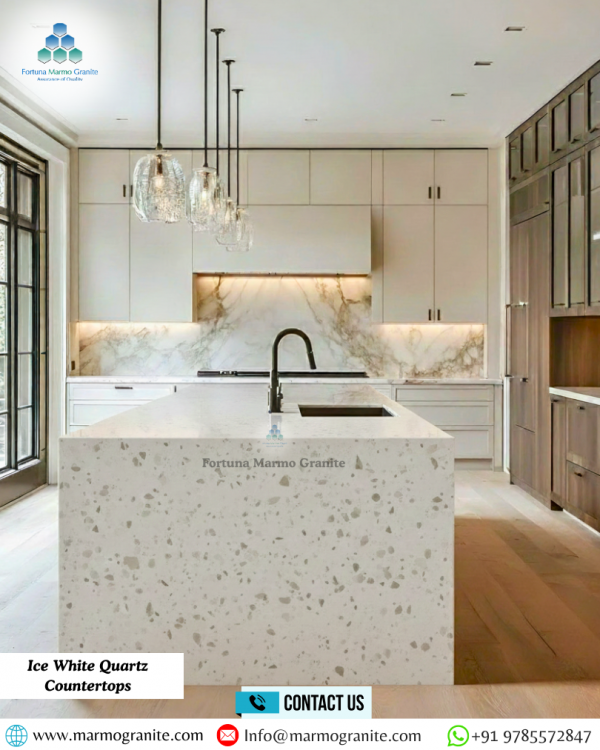
- Full-Height Backsplash: Instead of tile and grout lines (which get greasy), run the quartz slab all the way up to the bottom of your cabinets. It creates a sleek, seamless look that is incredibly easy to wipe down.
- Waterfall Edges: This is when the countertop "drops" down the side of the island all the way to the floor. It's a showstopper move that turns your kitchen island into a piece of furniture.
- The Cost Reality Check
Is quartz cheaper than granite? Not necessarily. While it used to be a budget alternative, high-quality quartz now costs about the same as mid-to-high-range granite.
The price usually depends on the complexity of the design. A solid grey slab will be cheaper than a slab with intricate, hand-painted-style veins. Designers tell their clients to budget for the installation as much as the stone itself. Since quartz is heavy and requires special saws to cut, you want a pro doing the heavy lifting.
- Cleaning is a Breeze (If You Use the Right Stuff)
You don't need fancy stone cleaners. In fact, designers recommend keeping it simple.
- The Go-To: Warm water and a drop of mild dish soap.
- What to Avoid: Stay away from bleach, highly acidic cleaners (like lemon or vinegar), or abrasive "scrubby" pads. These can dull the surface over time. If you have a stubborn dried-on mess, use a plastic putty knife to gently scrape it off.
- Check the Brand and Warranty
Not all quartz is created equal. There are "off-brand" slabs that might use lower-quality resins which can yellow over time if exposed to sunlight.
Designers stick to reputable brands like Caesarstone, Silestone, Cambria, or LG Viatera. These companies offer solid warranties (often 10-25 years or even a lifetime) and have strict quality control. If you're investing thousands of dollars, that piece of paper matters.
Conclusion
Choosing quartz countertops is a smart investment for homeowners and designers seeking the perfect balance of beauty, durability, and low maintenance. With their wide range of colors, patterns, and finishes, quartz surfaces effortlessly complement modern, contemporary, and even classic interiors. Choosing Quartz Countertops, Their non-porous nature makes them resistant to stains, scratches, and bacteria, ensuring long-term performance in busy kitchens and bathrooms.
Indian Granite Supplier, When quality, precision, and global standards matter, Fortuna Marmo Granite stands as a trusted name, delivering premium quartz countertops crafted with expertise and attention to detail for projects worldwide.