
Quartz Stone Manufacturing Process, Quality, and Applications
Quartz Stone Manufacturing Process, If you've walked into a modern kitchen or a high-end hotel lobby recently, you've likely stood in front of a Quartz surface. It looks like natural stone, feels like luxury, but performs like a high-tech armor.
Quartz Supplier From India , But what exactly is it? Unlike granite or marble, which are sliced straight out of a mountain, Quartz stone is an engineered marvel. It combines the best of nature with the precision of modern technology.
In this guide, we'll take a deep dive into how Quartz is made, why it's becoming the world's favorite surface, and where it fits best in your home or business.
1. The Manufacturing Process: How Magic Happens
Phase 1: Selection of Raw Materials
It all starts with Natural Quartz crystals, one of the hardest minerals found on Earth. These crystals are crushed into various sizes—some are as fine as sand, while others are large chunks the size of rock salt.
To turn these loose rocks into a solid slab, manufacturers add:
- Resin Binders: Usually polyester resin, which acts like the "glue."
- Pigments: These give the stone its color, from pure snowy white to deep midnight black.
- Additives: Sometimes bits of recycled glass, metallic flakes, or mirrors are added to give the stone a unique sparkle.
Phase 2: Mixing and Distribution
The materials are tossed into giant industrial mixers. The ratio is usually around 90–93% natural quartz and 7–10% resin and pigment. This high mineral content is what makes the final product so incredibly tough. Once mixed, the "dough" is poured into a large mold that determines the slab's size.
Phase 3: The "Vibro-Compression" Secret
This is where the real science happens. The mold enters a vacuum press. Here, the machine applies massive pressure while simultaneously vibrating the mixture.
- The Goal: To remove every single air bubble.
- The Result: A slab that is completely non-porous and extremely dense.
Phase 4: Curing (The Oven)
The slabs move into a curing kiln. Under intense heat, the resin undergoes a chemical reaction that bonds everything together permanently. This "sets" the stone, turning it from a soft mixture into a rock-hard slab.
Phase 5: Polishing and Finishing
Finally, the slabs are cooled and then put through a series of polishing heads. Just like a diamond, the natural shine of the quartz is brought out through friction and water. The edges are trimmed, and the slab is ready for inspection.
2. Quality: Why Quartz is the "MVP" of Surfaces
Unmatched Hardness
On the Mohs scale of mineral hardness, Quartz sits at a 7. For context, a diamond is a 10. This makes it incredibly difficult to scratch or chip. You can chop vegetables on it (though we still recommend a cutting board to save your knives!) and it won't flinch.
Non-Porous Perfection
Natural stones like marble have tiny "pores" or holes. If you spill red wine or lemon juice on marble, it seeps in and leaves a permanent stain. Because Quartz is engineered under a vacuum, it has zero pores.
- Stain Resistant: Coffee, wine, oil, and vinegar just sit on the surface, waiting to be wiped away.
- Hygienic: Since there are no pores, there's nowhere for bacteria, mold, or mildew to hide. This is why it's a top choice for healthcare environments.
Consistency
If you buy a slab of granite, you might find a big "blotch" or a crack in the middle that you didn't expect. With Quartz, what you see in the showroom is exactly what you get. The patterns and colors are controlled, making it much easier for architects to plan large-scale projects where multiple slabs need to match perfectly.
3. Top Applications: Where to Use Quartz
A. Kitchen Countertops and Islands
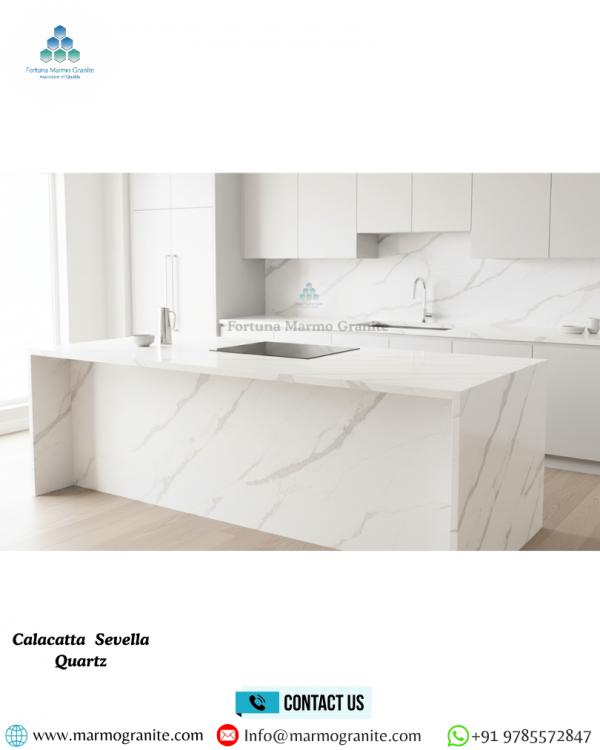
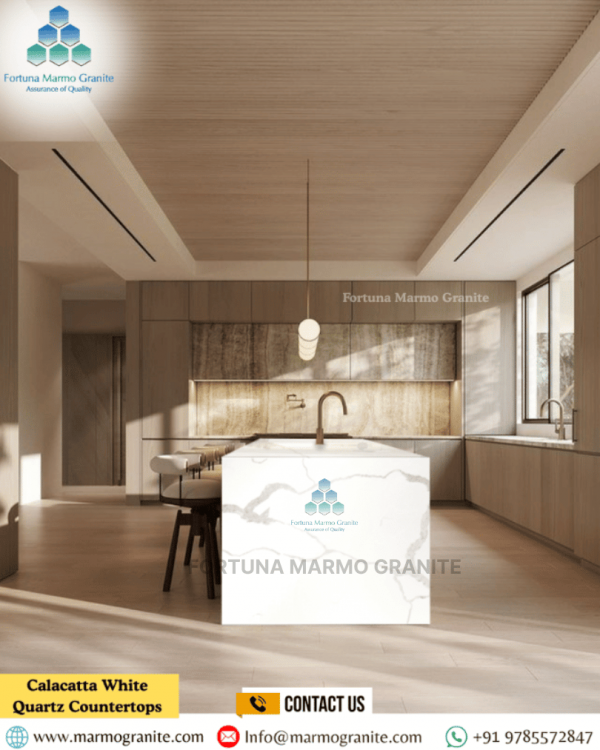
The "classic" use. Because it's heat-resistant and nearly impossible to stain, it is the workhorse of the modern kitchen. Whether you want a "waterfall" island edge or a simple sleek top, Quartz delivers.
B. Bathroom Vanities and Walls
Bathrooms are damp environments. Since Quartz doesn't absorb water, it won't rot or warp. Many homeowners are now using thin slabs of Quartz for shower walls instead of tile. Why? No grout lines. No grout means no scrubbing moldy cracks!
C. Flooring in High-Traffic Areas
You'll often see Quartz flooring in airports, shopping malls, and hotel lobbies. It can handle thousands of feet walking over it every day without losing its shine.
D. Furniture and Accents
Designers are getting creative. We are seeing Quartz used for:
- Dining room tables
- Fireplace surrounds (it handles heat well, though not direct flame)
- Backsplashes
- Office desks
4. Maintenance: Keeping it Beautiful
One of the biggest selling points of Quartz is that it is low-maintenance, not "no-maintenance." To keep your stone looking brand new for decades, follow these simple rules:
- Skip the Sealer: Unlike granite or marble, Quartz never needs to be sealed or waxed.
- Use Mild Soap: All you need is warm water and a drop of dish soap. Avoid harsh chemicals like bleach or highly acidic cleaners, as these can eventually dull the resin.
- Watch the Heat: While Quartz is heat-resistant, it isn't "heat-proof." The resin can be damaged by sudden, extreme temperature changes (thermal shock). Always use a trivet or hot pad for pans straight off the stove.
Conclusion
In conclusion, the quartz stone manufacturing process is a perfect balance of advanced technology, carefully selected raw materials, and strict quality control to produce surfaces that are durable, consistent, and visually appealing. From precise blending of natural quartz with resins and pigments to controlled curing, polishing, and inspection, each stage ensures superior strength, low maintenance, and long-term performance.
With uniform patterns, multiple color options, and excellent resistance to stains and scratches, quartz continues to be a preferred choice in modern construction and interior design. Fortuna Marmo Granite, as a reliable quartz stone manufacturer and exporter, delivers high-quality quartz surfaces that meet international standards, offering customized solutions and dependable supply to customers worldwide.